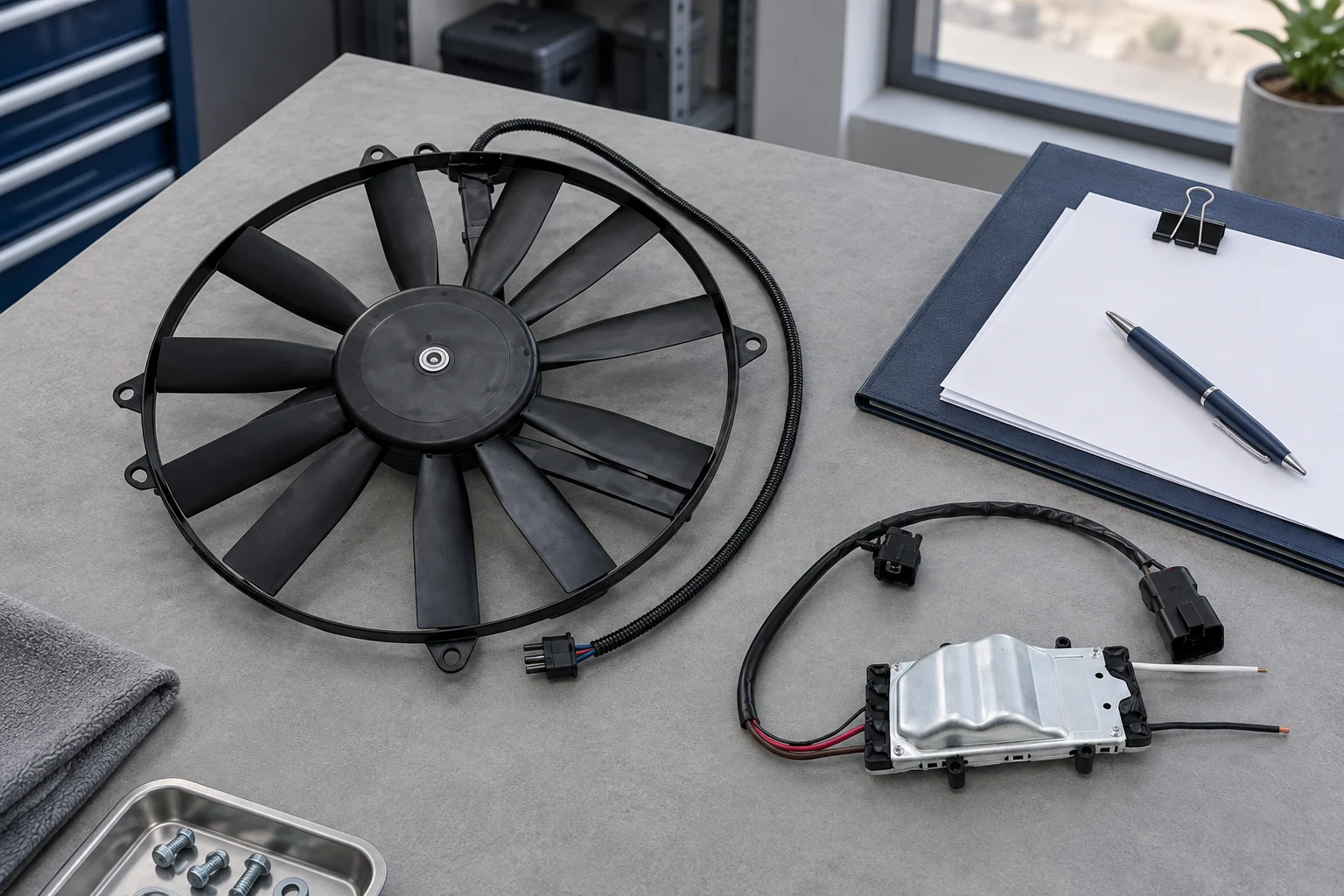

1. Build one clear row for each requested item
Give every line a buyer item ID and a complete reference. Include the application, quantity and required assembly scope. “Fan, 100 pieces” leaves the product open to interpretation; a specific reference with “complete assembly” or a named component gives the supplier a clearer request.
| Column | What to enter |
|---|---|
| Item ID and reference | Your row ID, original number and supplier code if already known. |
| Application and scope | Vehicle details and the components required. |
| Quantity | Quantity for that reference, with samples listed separately. |
| Attachments | Matching photo filenames and any open identification question. |
Keep different references on separate rows, even when the quantities match. If the identification is not settled, flag it and link the evidence rather than guessing. The OE-number guide helps prepare that part of the request.

2. State the requirements that affect packing and dispatch
Say whether this is a sample review, first order or repeat purchase. Give the destination country and delivery location needed for the requested shipping estimate. If you have a preferred shipping arrangement, name it; otherwise ask which options the offer covers.
Describe the packaging you actually need: individual protection, any inner or outer carton requirements, and labels or artwork that require agreement. Ask what packing information can be provided for the quoted parts, including units per carton, carton dimensions and gross weight when available. Do not assume those details are identical across references.
Distinguish a requested arrival date from a supplier-confirmed schedule. Ask what starts the quoted lead time and identify any approvals or information needed before the order can proceed.

3. Compare quotations using the same commercial basis
Put the returned offers beside your original rows and check that the reference, quantity and assembly scope still agree. A lower unit price is difficult to interpret when one offer excludes a component or uses different packaging.
- Record currency, unit price, line total and the quantity condition for each item.
- Confirm minimum order quantities by reference and any order-level requirement.
- Separate product charges from samples, packaging, freight and other quoted charges.
- Write down the shipping basis, named destination or place, payment terms and offer validity.
- Record the proposed schedule and the conditions attached to it.
Leave an omitted term marked “not stated” until clarified. If a document is required for your purchase, identify it precisely and ask whether it is available for the quoted reference. Do not treat general company material as product-specific evidence.

4. Close open questions and save the approved version
Keep a short issue list with the affected item ID, question, supplier response and status. Resolve differences in references, quantities or packing before confirming the order. For a fan reference that still needs technical review, use the radiator fan buying checklist alongside the commercial comparison.
Save one final quotation version and attach the approved item list, product specifications and agreed packing details. Record who approved it and when. If any answer changes the order, ask for an updated offer so the purchase order and quotation refer to the same conditions.
For a repeat purchase, cite the previous approved reference and clearly list changes in quantity, destination or requirements. This provides a usable comparison point without silently carrying old terms into a new order.