
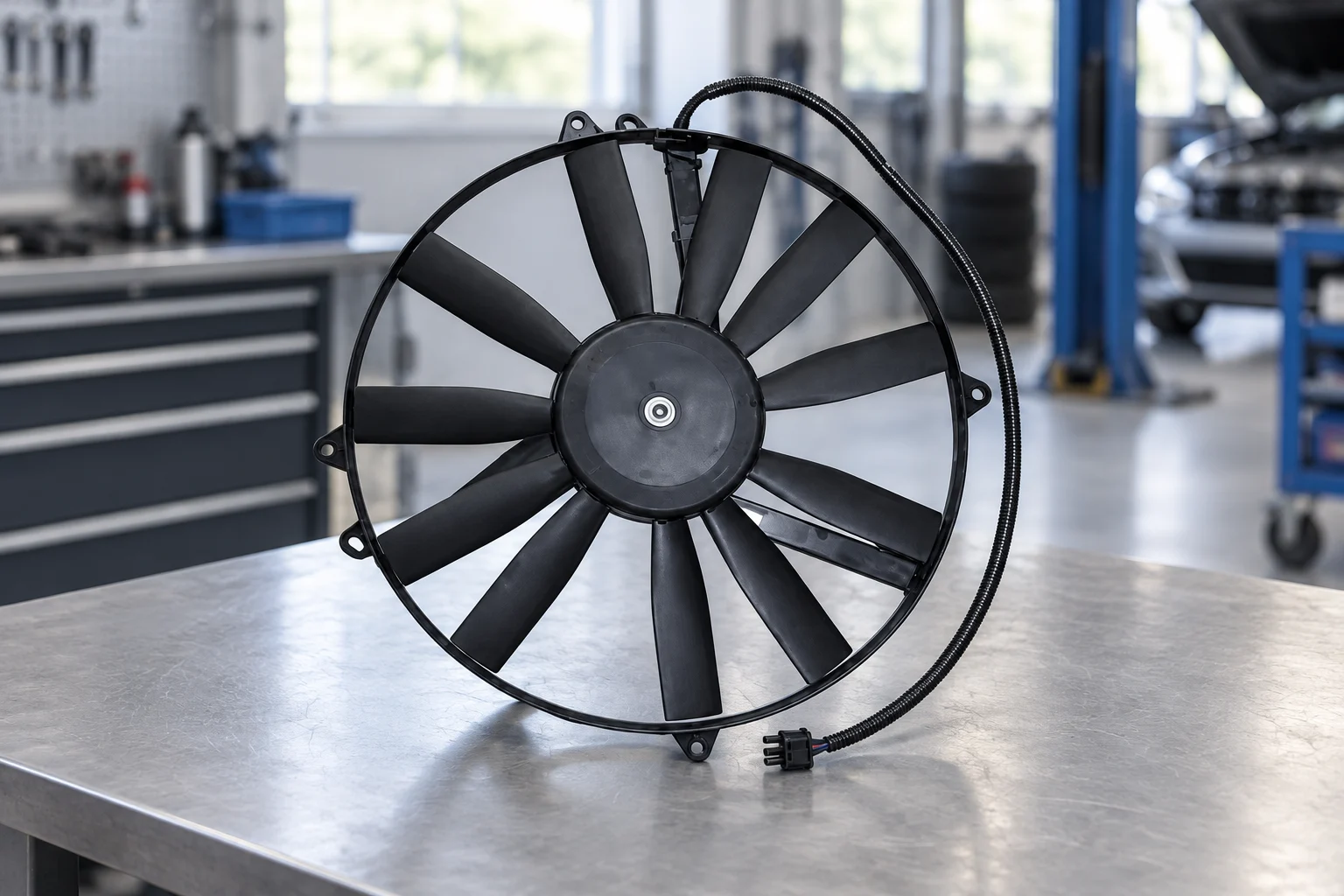
1. Establish the vehicle and the part being replaced
Begin with the vehicle make, model, production year and engine variant. Copy the existing part number in full, including any suffix, and attach a readable label photograph. If a label is missing, record that fact and provide the information you do have; an uncertain character should remain a question until it is resolved.
- State whether you are replacing a complete fan assembly, a motor or another individual component.
- Mention previous replacements, modifications or wiring changes that you know about.
- Keep front, rear and label photos together under the same inquiry line number.
Ask the supplier to state the application against the quoted reference. If the application or reference is unclear, use the OE-number identification guide before treating a visual match as approval.
2. Compare mounting points and assembly scope
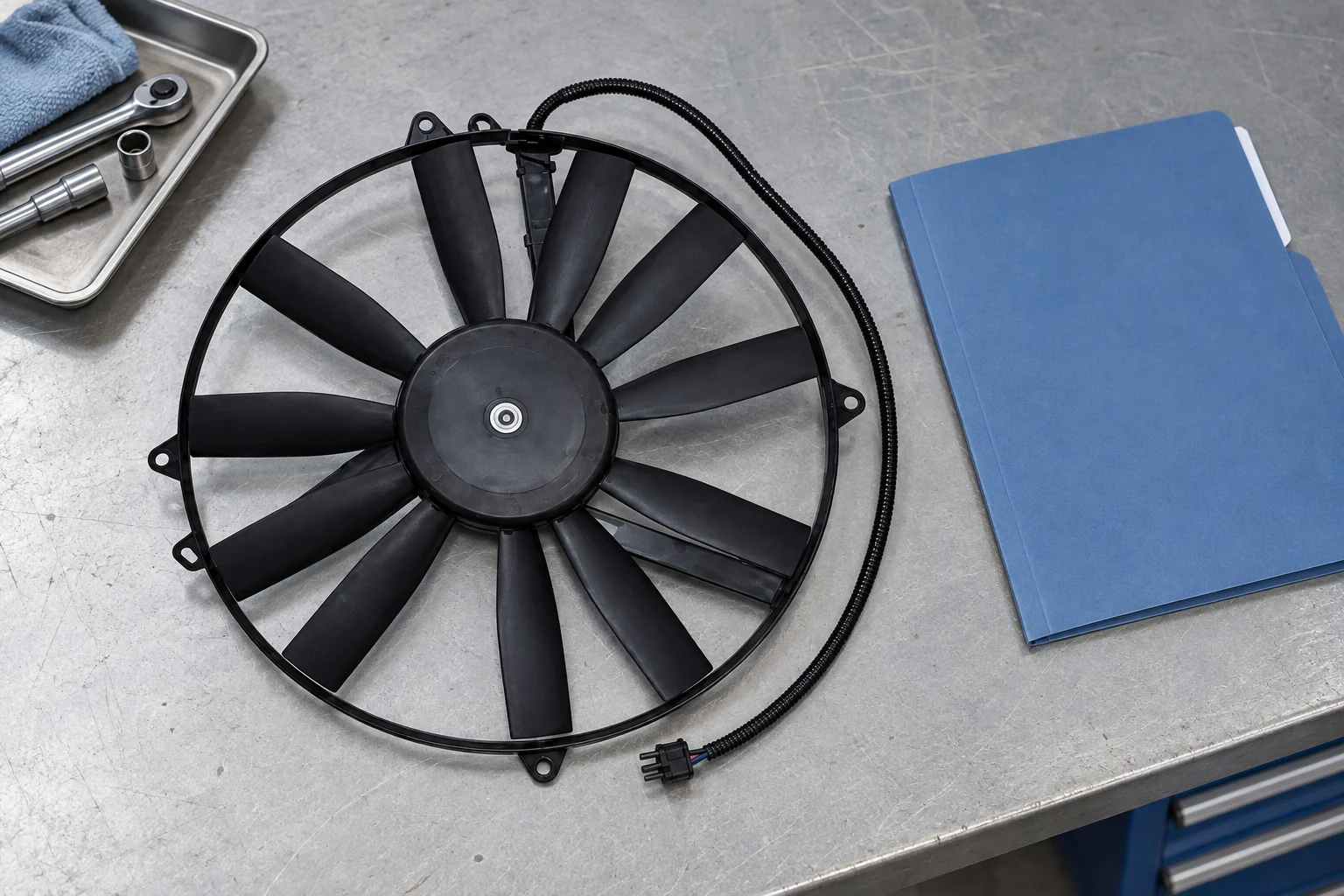
Photograph the removed assembly on a clear surface. Include an overall view and close-ups of fixing points; when dimensions are needed, agree the measurement points with the supplier. Measuring from different edges can create an apparent match that does not answer the installation question.
| Check | What to confirm |
|---|---|
| Mounting | Tab positions, holes and fixing arrangement. |
| Space | Overall outline and depth against the available clearance. |
| Included parts | Motor, blade, shroud and any quoted controller or wiring. |
Request a drawing or marked product photograph where available. Note missing information as an open item rather than estimating it from an image. The approved record should show exactly which components the quoted price covers, especially when two offers use the same general description.

3. Review the electrical connection
Take a clear view of the connector face, housing and cable route. A front photograph of the fan usually does not provide enough detail to compare the electrical interface. Record visible pins and keying features without inserting tools or altering the connector.
- Confirm the specified voltage and control arrangement for the proposed product reference.
- Compare connector shape, locking features, pin count and any supplied harness.
- Ask the supplier to explain a discrepancy before approving an alternative.
Do not assume that matching pin counts or a connector that appears to fit establish electrical compatibility. If the control details cannot be verified from the available documents, keep approval pending and involve a qualified vehicle technician. Document any required adapter or separate component explicitly.

4. Approve the evidence, then place the order
Create a short approval record containing the supplier item number, vehicle details, agreed assembly scope and the images or drawing used for comparison. Date the record so that the reviewed version remains clear when photographs or quotations are updated.
For a new reference, ask about sample availability and agree how fit and function will be assessed. Request only the product documents relevant to your purchase; confirm their reference and scope instead of assuming that a report for one item covers every fan. Record unresolved points and who will answer them.
Attach the final specification to the purchase order alongside quantity, packaging and commercial terms. For a repeat order, compare against that version and call out changes. The wholesale inquiry guide explains how to organize those order details.
