
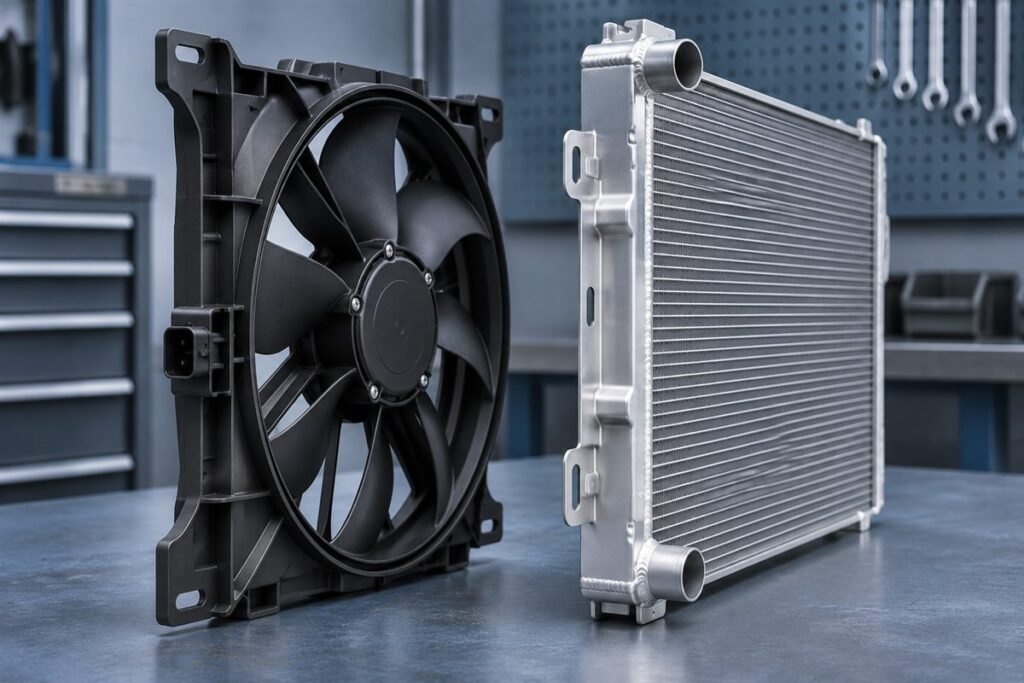
A new radiator fan may blow the wrong way if its airflow direction doesn’t match the mounting position, the replacement motor or blade is the wrong version, or the wiring doesn’t match the fan’s pinout. On a typical front-radiator vehicle, air should move from the grille through the radiator toward the engine bay. This Yongshang Cooling guide shows what to check before changing the wiring or ordering another fan. Derale pusher and puller installation diagrams
1. Check the airflow through the radiator
A pusher mounts on the grille side and pushes air through the radiator. A puller mounts on the engine side and draws air through it. Both move air in the same direction through the core. Start by checking the airflow arrow on the fan shroud or the drawing for the exact part number. If the specification lists clockwise or counterclockwise rotation, confirm which side you’re meant to view it from. Derale installation instructions

2. Check what changed during installation
| What changed | What to verify |
|---|---|
| You installed a complete replacement fan | Compare its part number, specified mounting side, and airflow arrow with the original assembly. |
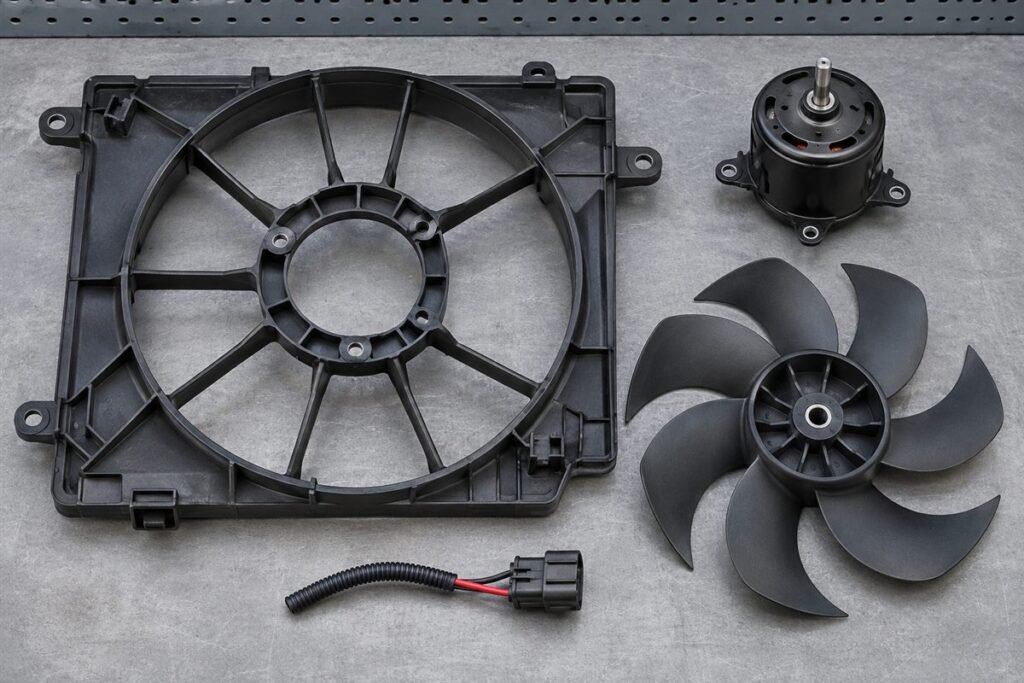
| You replaced only the motor | Check the motor’s specified rotation from the same viewing side and confirm it matches the existing blade. |
| You reused or replaced the blade | Check the blade part number, pitch, and installation orientation against the assembly instructions. |
| You fitted an adapter or repaired the connector | Compare the vehicle and fan pinouts. Verify the function of each pin before relying on wire colors or connector shape. |
3. Confirm whether the fan is designed to be reversed
Use the instructions for the exact fan model. For example, some Derale Tornado fans require both a blade flip and a wiring change when converting from puller to pusher. Certain Derale High Output RAD models can be fitted on either side using the specified mounting orientation, with the wiring and blade left as supplied. On fans with integrated electronics, check the power, ground, and control pins against the manufacturer’s diagram before making wiring changes. Derale Tornado instructions · Derale High Output RAD instructions · SPAL brushless fan wiring diagrams
4. Verify the repair before the vehicle goes back into service
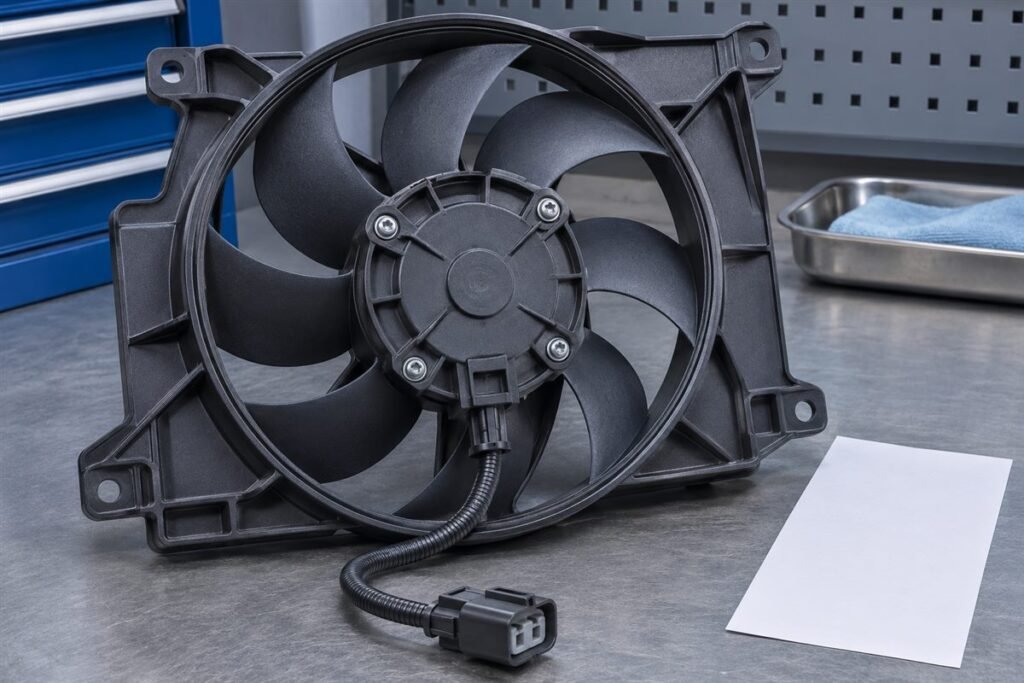
Secure the fan and shroud, then run the fan using the manufacturer’s test procedure. Keep hands, tools, and loose materials clear of the blades. Confirm that air moves through the core in the intended direction. If the direction is correct but airflow is weak, check the fan speed, shroud fit, and gaps that could let air bypass the radiator.
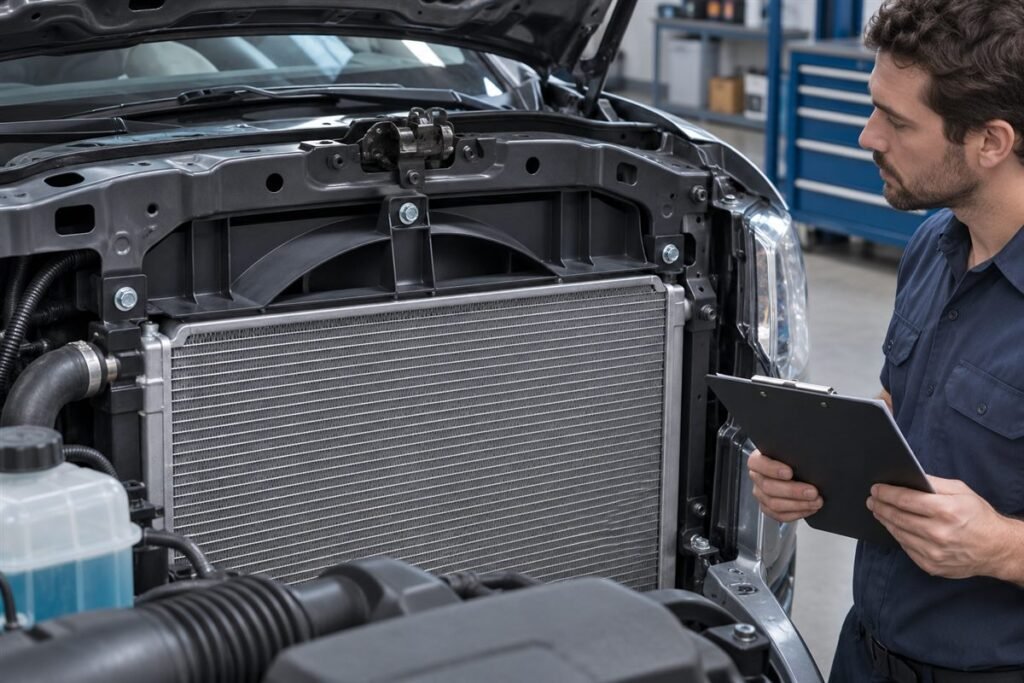
AI-generated editorial illustration of generic parts and workshop scenes.
Need to match a replacement radiator fan?
Send Yongshang Cooling the vehicle year, make, model, engine, and original part number. Include photos of the connector and airflow markings, plus the intended mounting side. If you’re replacing the motor or blade separately, include the original assembly number so the components can be matched together. Request a cooling parts quote